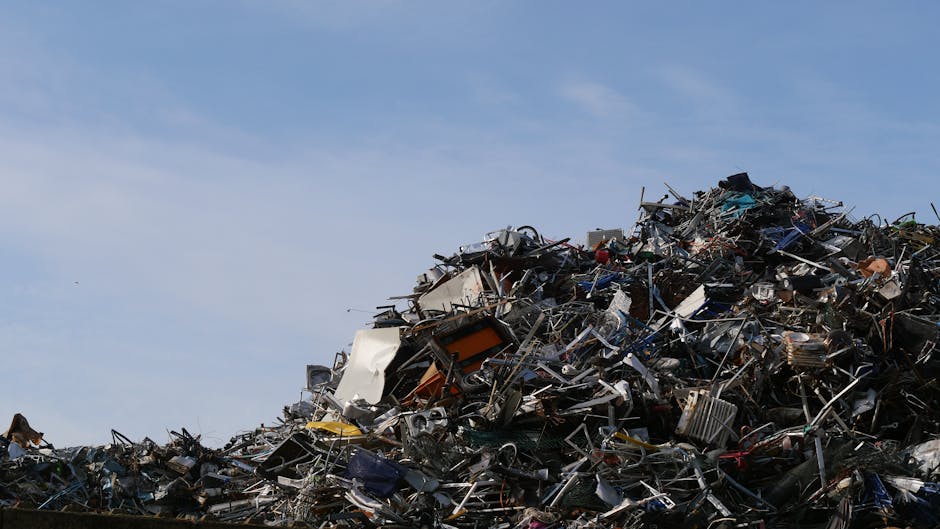
Industrial estate bulky rubbish pickup in Byfleet made easy
If you manage a unit, yard, workshop, warehouse, or multi-tenant site, bulky waste has a habit of building up quietly and then suddenly becoming urgent. One skipped clear-out, one contractor leaving pallet wrap behind, or one refurbishment job running a day late, and the place starts to feel cluttered fast. That is exactly where industrial estate bulky rubbish pickup in Byfleet made easy becomes more than a convenience. It becomes a practical way to keep operations moving, staff safe, and the site looking organised.
In Byfleet, industrial estates often deal with awkward items that do not fit in standard bins: broken shelving, office furniture, packaging waste, timber offcuts, machinery parts, old displays, and mixed junk from stock moves or end-of-lease clearances. The trick is not just getting rid of it. The trick is doing it without slowing your team down, creating access issues, or leaving yourself with compliance headaches. This guide walks through how it works, what to expect, and how to choose a sensible approach that saves time rather than creating another job.
For readers who want to understand the wider company standards behind service delivery, it can also help to look at the site's about the company, pricing and quotes, and recycling and sustainability information before booking anything. That gives you a better feel for the process, and frankly, it saves a few awkward back-and-forth emails.
Table of Contents
- Why Industrial estate bulky rubbish pickup in Byfleet made easy Matters
- How Industrial estate bulky rubbish pickup in Byfleet made easy Works
- Key Benefits and Practical Advantages
- Who This Is For and When It Makes Sense
- Step-by-Step Guidance
- Expert Tips for Better Results
- Common Mistakes to Avoid
- Tools, Resources and Recommendations
- Law, Compliance, Standards, or Best Practice
- Options, Methods, or Comparison Table
- Case Study or Real-World Example
- Practical Checklist
- Conclusion
- Frequently Asked Questions
Why Industrial estate bulky rubbish pickup in Byfleet made easy Matters
Bulky rubbish on an industrial estate is not just "messy". It can get in the way of loading bays, block fire exits, make walkways awkward, and create a poor impression when clients, suppliers, or inspectors turn up. You notice it most in the little moments: a stack of old desks by the shutter door, broken pallets near the skip area, or mixed materials sitting under a tarp because nobody quite knew what to do with them. Then one wet morning arrives, the tarp flaps loose, and the whole corner looks like trouble.
Making the pickup process simple matters because industrial sites usually run on tight timing. Deliveries, production, dispatch, and tenant access all depend on clear ground and predictable movement. If waste removal takes too long, the knock-on effects can be annoying at best and disruptive at worst. A decent bulky rubbish pickup service helps you clear space without pausing the rest of the site.
There is also a reputational side to it. Industrial estates in and around Byfleet often host a mix of trade units, storage businesses, and office-style occupiers. When waste builds up outside units, it can affect how the whole estate feels. Neat waste handling says the site is active, responsible, and looked after. That sounds small, but people absolutely notice.
Practical takeaway: the easiest bulky rubbish pickup is the one that protects access, keeps the site safe, and removes waste in a way that fits your working day rather than interrupting it.
How Industrial estate bulky rubbish pickup in Byfleet made easy Works
The process is usually straightforward, though the details matter. A good bulky waste pickup starts with identifying what needs removing, where it is located, and how easy it is to reach. That may sound obvious, but on industrial estates it can be surprisingly complicated. Is the waste inside a first-floor unit? Is there a shared yard? Will a van need to reverse near a loading area? Is there a secure gate or restricted access time? These details change the job.
Typically, the pickup process follows a few stages:
- Initial enquiry: you explain what needs to go, roughly how much there is, and when you want it collected.
- Assessment: photos, measurements, or a quick site description help determine vehicle size, labour needs, and any access challenges.
- Quote and booking: you receive a price based on the volume, weight, labour, and collection conditions.
- Arrival and loading: the team collects the bulky items, separates materials where practical, and loads the waste safely.
- Sorting and disposal: reusable or recyclable materials are diverted where possible, with the remainder handled appropriately.
That is the simple version. In practice, it works best when the site is prepared in advance. If the waste is scattered across different bays or mixed with items you want to keep, the crew will spend more time sorting, which can affect efficiency. A tidy pile is faster. Always.
Some industrial estate clearances are one-off jobs after a move, refit, or lease end. Others are recurring, such as monthly or ad hoc pickups when stock or packaging waste builds up. If your site generates irregular bulky waste, flexibility matters more than rigid schedules. You want a collection that fits the reality of the unit, not the other way around.
Key Benefits and Practical Advantages
The main benefit is obvious: you get the bulky rubbish removed. But the real value is broader than that. When industrial estate pickups are handled properly, the site runs more smoothly and the pressure on your own staff drops. Nobody wants to spend half a morning trying to figure out where six old office chairs should go. That is not the best use of a skilled team's time.
- Better site presentation: a clean yard and clear access points make the whole estate look more professional.
- Improved safety: fewer trip hazards, fewer obstructions, and less clutter around loading zones.
- Less staff disruption: your team can focus on operations instead of waste sorting and moving.
- Faster turnaround: bulky waste can be cleared in a planned visit rather than left hanging around for weeks.
- More sustainable handling: a responsible service will separate recyclable materials where possible.
- Better space use: freeing up storage corners, shared yards, and unused office areas creates breathing room.
There is also a decision-making advantage. When waste removal is simple and predictable, you are less likely to delay it. And delayed waste tends to grow into a larger, more awkward job. Let's face it, rubbish has a strange talent for multiplying when nobody is looking.
If cost and payment setup matter to your business, it is worth checking the provider's payment and security information so you know how transactions are handled. For many commercial customers, that peace of mind matters just as much as the collection itself.
Who This Is For and When It Makes Sense
This kind of pickup is a strong fit for a wide range of Byfleet industrial estate users. It is not only for large manufacturers or big warehouses. In fact, some of the most common callouts come from smaller units where space is tight and every square metre matters.
You may need industrial bulky rubbish pickup if you are:
- moving into a new unit and clearing leftover items left by previous occupiers
- moving out and need to return the space clean and empty
- refitting offices, workshops, or storage areas
- disposing of damaged furniture, broken fixtures, or old equipment
- dealing with packaging buildup after stock deliveries
- clearing accumulated junk from shared estate areas
- preparing for an inspection, audit, or handover
It also makes sense when you simply do not have the staff, the vehicle, or the time to manage removal yourself. A lot of business owners start with the thought, "We'll sort that out next week." Then next week becomes next month. If the waste is already affecting access or morale, that is usually the moment to act.
One common scenario is an industrial unit with a mezzanine storage area. The space slowly fills with outdated furniture, random offcuts, unused displays, and boxes that nobody has opened in years. The unit owner knows it needs clearing, but the job feels bigger than a standard tidy-up. That is where a targeted bulky pickup saves a lot of faff.
Step-by-Step Guidance
If you want the process to feel genuinely easy, it helps to follow a clear order. Small preparation at the start usually saves time later. Not glamorous, but effective.
1. Separate what is going and what is staying
Before anyone arrives, walk the area and mark the items for removal. Use tape, labels, or a simple list. Keep anything valuable, confidential, or reusable away from the waste pile. If something may need dismantling, note that too.
2. Group items by type
Putting similar materials together helps the team work faster. For example, stack timber with timber, office chairs with office furniture, and scrap metal with metal items if practical. Mixed piles can still be collected, but they are slower to handle.
3. Check access carefully
Industrial estates often have gates, turning restrictions, shared parking, and narrow loading spaces. Measure door widths if necessary. If the collection vehicle needs a specific arrival time to avoid deliveries, say so upfront. A five-minute misunderstanding here can turn into a half-hour delay. Nobody enjoys that.
4. Highlight hazards
If there are sharp edges, heavy items, or awkward materials, point them out before loading begins. This is especially useful with broken shelving, glass panels, or machinery parts. Good communication helps prevent injuries and damage.
5. Ask how materials will be handled
It is sensible to ask whether recyclable materials can be separated and where the waste is likely to go. You do not need a lecture. Just a clear answer. Many business customers want to know their waste is being managed responsibly.
6. Keep paperwork and records
For business waste, retaining collection details is good practice. If your business has site management requirements or internal audits, documentation helps. It is one of those small admin habits that pays off later.
For service expectations, terms, and booking conditions, you can also review the company's terms and conditions and, if needed, the contact page for direct questions before collection day.
Expert Tips for Better Results
After enough collections, a pattern becomes obvious: the smoother jobs are usually the ones where the customer has prepared a little. Not obsessively. Just enough.
Tip 1: Make the pile visible and accessible. If the waste is tucked behind other stock or buried in a back room, the crew spends time finding and moving things before they even start loading. Visibility speeds everything up.
Tip 2: Allow for one extra minute of thought on mixed waste. Mixed waste can be perfectly manageable, but it benefits from a quick review. A bit of wood, a bit of metal, some office waste, maybe a broken trolley. Fine. But if electrical items or restricted materials are mixed in, it needs a more careful approach.
Tip 3: Keep staff away from the work zone. It sounds simple, but people like to help, hover, or point things out at the wrong moment. Better to designate one person to liaise with the crew. That cuts confusion.
Tip 4: Photograph the area before and after. This is useful for internal records, landlord handovers, or simple peace of mind. A quick phone photo can answer a surprising number of questions later.
Tip 5: Plan around busy trading times. If your loading bay gets hammered at 8:30 a.m. or the yard is busiest at lunchtime, schedule the pickup outside those windows if possible. A calmer slot makes the whole job feel easier, both for the crew and your team.
One extra note: if you are trying to clear a whole site rather than one corner, do not underestimate the value of sequencing. Clear the most obstructive items first. That gives you space to work and reduces the "everything is in the way of everything else" problem. Been there, seen it, not fun.
Common Mistakes to Avoid
Industrial estate clearances often go wrong for boring reasons. That is the frustrating bit. Not dramatic reasons. Just avoidable ones.
- Leaving the whole job to the day of collection: sorting waste at the last minute usually means slower loading and more confusion.
- Hiding mixed materials in one pile: if different waste types are blended carelessly, it can complicate handling.
- Ignoring access issues: low barriers, tight turns, or locked gates can cause delays if nobody mentions them.
- Forgetting about staff or tenant disruption: if multiple businesses share the estate, tell them when a pickup is happening.
- Assuming every item is straightforward: some bulky goods may need special handling if they are heavy, awkward, or part-dismantled.
- Not asking about recycling: this is a missed opportunity to keep more material out of disposal routes.
Another subtle mistake is underestimating volume. A small stack near the door can look harmless until you start moving it and realise it includes several large items, packaging, and loose material. A quick walk-round before booking gives a much better sense of scale.
Tools, Resources and Recommendations
You do not need a lot of specialist equipment for a bulky rubbish pickup, but a few practical tools make the job smoother. A tape measure, marker labels, gloves, a torch, and a phone camera are often enough for the planning stage. For larger estates, a simple site map or marked access plan is helpful too.
Here are a few practical recommendations:
- Use labels or coloured tape: "remove", "keep", and "unsure" are surprisingly effective categories.
- Keep a short inventory: especially for office furniture, fixtures, and larger items.
- Coordinate with site staff: one responsible contact saves a lot of repeated explanations.
- Check out trust pages before booking: the company's health and safety policy and insurance and safety information are useful if you want reassurance on safe working practices.
- Review sustainability commitments: if recycling matters to your business, the recycling and sustainability page is worth reading.
If you need help understanding booking processes, the pricing and quotes page is a sensible next stop. And if you are checking how your information is handled, the privacy policy and accessibility statement are there as well.
Law, Compliance, Standards, or Best Practice
For industrial estate waste, the main thing is to follow sensible UK best practice and business waste responsibilities. You do not need a legal dissertation to get this right, but you do need to be careful about what is collected, how it is stored, and who is handling it. If you are arranging disposal on behalf of a business, make sure the provider is appropriate for business waste and that you understand the collection terms.
Best practice usually includes:
- keeping waste separated where practical
- avoiding blocked exits, walkways, and emergency access routes
- storing bulky waste securely until collection
- being clear about any hazardous, sharp, or heavy items
- keeping records of collections where your business needs them
If waste includes items that may need special handling, such as electricals, chemicals, or anything with contaminated residue, pause and check before placing it in a standard bulky pile. Better safe than sorry. A quick clarification upfront can prevent a messy, expensive mistake later.
Good operators should also work in line with their own internal safety policies. If you want to understand how a provider approaches this, the health and safety policy, insurance and safety, and modern slavery statement pages are useful indicators of how they think about responsible operations. Not the most exciting reading, admittedly, but they do tell you a lot about standards.
Options, Methods, or Comparison Table
There are a few ways businesses usually handle bulky waste on an industrial estate. The best method depends on volume, urgency, access, and how much labour you can spare internally.
| Method | Best for | Pros | Trade-offs |
|---|---|---|---|
| Ad hoc bulky pickup | One-off clear-outs, moves, refurbishments | Fast, simple, minimal disruption | Needs clear access and good preparation |
| Planned recurring collections | Sites with regular bulky waste buildup | Predictable, easier to budget and schedule | May be unnecessary if waste is occasional |
| Self-managed removal | Small volumes and very simple loads | Direct control, useful for minor jobs | Uses staff time, vehicles, and sorting effort |
| Full site clearance | End-of-lease or major declutter projects | Clears everything in one go | More planning, more labour, more coordination |
In plain English: if the job is awkward, heavy, time-sensitive, or mixed up with day-to-day business activity, a professional pickup is usually the cleaner option. If it is a tiny amount and you already have the right vehicle and manpower, self-managed removal might be enough. Most people end up somewhere in between.
Case Study or Real-World Example
Here is a realistic example. A small trade business on an industrial estate in Byfleet had cleared out an old mezzanine storage area after a stock system change. Over the years, the space had collected three broken desks, a few office chairs, shelving offcuts, damaged display panels, and a pile of assorted packaging that had somehow become permanent scenery.
The problem was not the volume alone. It was the access. The mezzanine was up a narrow internal stair, the unit had deliveries booked for the morning, and the yard outside needed to stay clear. So the collection was scheduled for a quieter window, the waste was grouped into a visible pile, and one person from the business stayed on hand to confirm what was going and what was not.
The result was simple: the load came out in one visit, the unit regained usable storage space, and staff could finally move without side-stepping old furniture. Nothing dramatic happened. Which, in waste removal terms, is usually exactly what you want. A clean finish and no drama is a very good day.
Practical Checklist
Use this checklist before collection day. It keeps things tidy and avoids the classic "oh, we forgot that bit" moment.
- Identify all bulky items for removal
- Separate items to keep from items to go
- Check access routes, gates, and parking space
- Mark any heavy, sharp, or awkward items
- Group similar materials where possible
- Confirm collection timing with site staff or tenants
- Keep confidential or valuable items out of the waste area
- Ask about recycling and disposal handling
- Prepare any internal records or photos needed
- Make sure the site contact is available on the day
Quick summary: the smoother the preparation, the easier the pickup. Simple as that. And it really is worth the half hour of prep.
Conclusion
Industrial estate bulky rubbish pickup in Byfleet made easy is really about removing friction. Not just removing waste, but removing the hassle around it: the uncertainty, the blocked corners, the half-finished clear-out, the awkward access, the unwanted admin. When the process is planned properly, bulky waste stops being a headache and becomes just another manageable part of running a site.
If you are clearing a unit, tidying a yard, or getting ready for a move or handover, the smart move is to plan early, keep the waste visible, and choose a provider that is clear about safety, recycling, pricing, and collection terms. That way you get the space back without the stress. Nice and straightforward, which is how it should be.
Get a free quote today and see how much you can save.
Frequently Asked Questions
What counts as bulky rubbish on an industrial estate?
Bulky rubbish usually means items that are too large, awkward, or heavy for normal bins. On industrial estates that often includes office furniture, shelving, pallets, broken equipment, packaging waste, and dismantled fixtures.
Can bulky waste be collected from shared yard areas?
Yes, but access needs to be clear and agreed in advance. Shared areas can work well if tenants, site managers, or security staff know the collection is happening and the waste is clearly marked.
How do I prepare an industrial unit for a bulky pickup?
Sort keep and remove items, group the waste together, check access, and flag anything unusually heavy or sharp. A little preparation usually saves time on the day.
Is it better to book one pickup or several smaller ones?
That depends on your site and waste pattern. One bigger visit is often simpler for clear-outs, while smaller recurring pickups suit sites with regular build-up. The right choice is the one that fits your workflow.
What if the bulky items are mixed with general waste?
Mixed waste is common, especially after refits or moves. It can still be handled, but separating materials where practical helps with loading efficiency and may support better recycling outcomes.
Do I need to tell the provider about access restrictions?
Yes, definitely. Gate codes, narrow entrances, loading bay rules, and restricted times can all affect the job. The more accurate the access details, the smoother the pickup.
How much notice should I give before collection?
As much as you reasonably can, especially if the job is large or access is tricky. Even a straightforward pickup benefits from a bit of lead time so it can be planned properly.
Can I include furniture, office junk, and warehouse debris in one load?
Often yes, provided the items are acceptable together and nothing restricted is mixed in. A quick description or photo set helps confirm the best approach before booking.
What should I ask about recycling?
Ask how the waste will be sorted, whether recyclable materials are separated, and how the provider approaches responsible disposal. If sustainability matters to your business, that is a fair question.
Is bulky rubbish pickup suitable for end-of-lease clearances?
Absolutely. In fact, end-of-lease work is one of the most common reasons businesses arrange this kind of service. It is especially useful when you need a space cleared quickly and cleanly.
What happens if I am not sure whether an item can be taken?
Describe it as clearly as you can and provide a photo if possible. Uncertainty is normal. A quick check before collection is far better than guessing and creating a problem later.
Where can I find more information about booking and trust details?
You can review the company's pricing and quotes, insurance and safety, and contact page for practical next steps and reassurance.
By the time the last item is loaded and the floor is clear, the site usually feels lighter straight away. That's the real value here: less clutter, less friction, and a bit more breathing room for the work that actually matters.